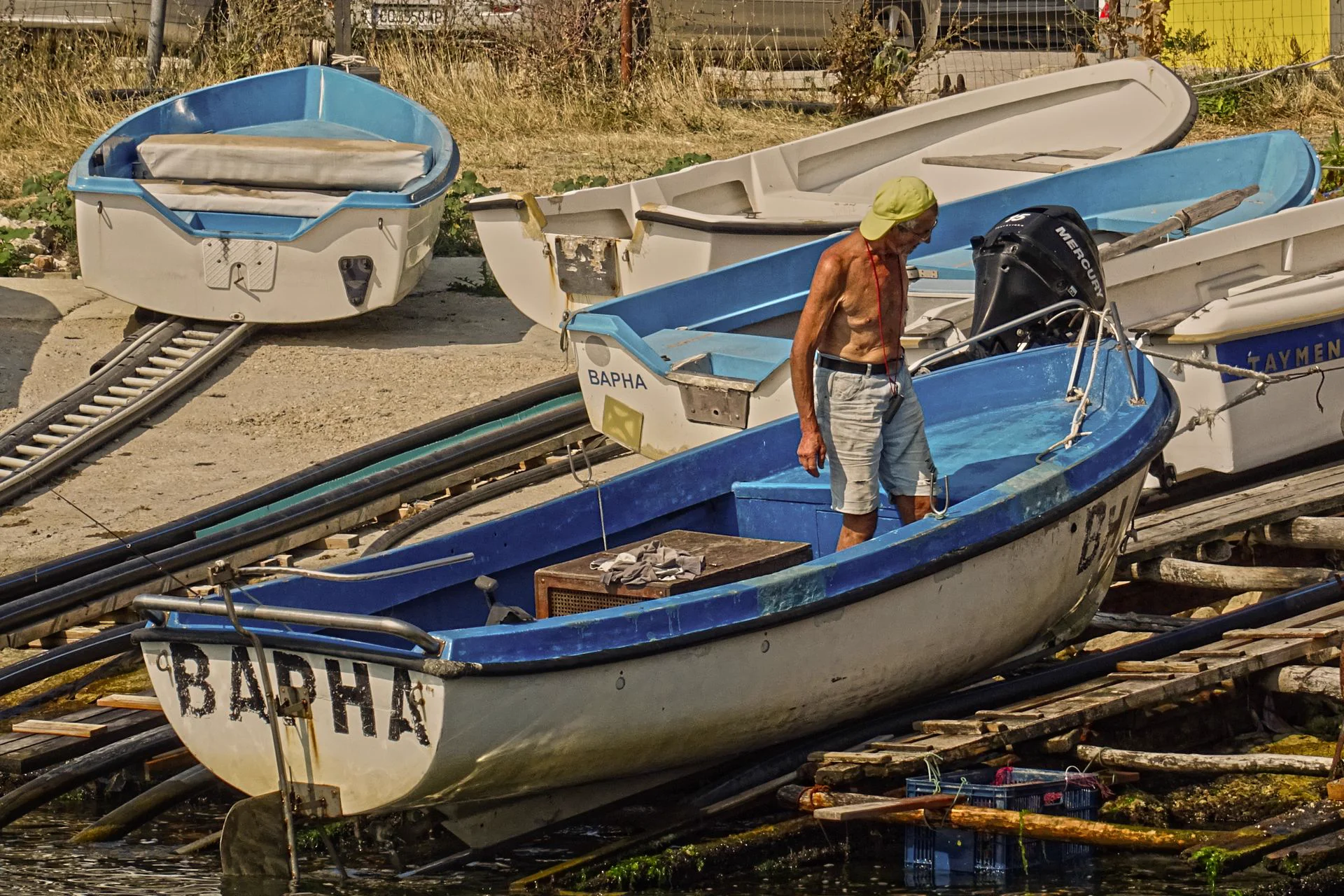
A short story about resilience is a story about someone who is knocked down and gets back up — not once, but as many times as it takes. This is the story of Elias, an old fisherman whose boat was broken by a storm, and who rebuilt it with his own two hands.
The Broken Oar
Elias had fished the waters off Greyhaven for fifty years, and his boat, the Maren, had carried him through every one of them. She was not a grand boat. Her paint was faded and her sail was patched, but Elias knew every plank of her the way a man knows his own hands.
Then came the storm.
It arrived on a night in late October, without warning. By morning, the Maren lay broken on the shingle — her mast snapped, her hull split open, her oars scattered like matchsticks along the beach. Elias stood on the shore in the cold grey light and looked at what was left of fifty years.
The other fishermen came to him with kind words and sad faces. “You’re too old to start again, Elias,” said Harlan. “Sell what’s left for timber. The sea owes you a rest.” Elias thanked them. And the next morning, before the sun was up, he walked down to the shore with a hammer, a saw, and a coil of rope.
He started with the oars. One oar was broken clean in half. Elias picked up the two pieces and turned them over in his hands. He could have thrown them away. Instead, he sat down on the shingle and began to work — fitting, gluing, binding the wood with rope, shaping a new handle from a piece of driftwood. It took him all day. When he finished, the oar was shorter than it had been, and heavier. But it was an oar again.
All through the winter, Elias worked. He salvaged every sound plank from the wreck and cut new ones from the oak the harbourmaster let him take. He worked in the cold and the rain. Twice a plank split as he nailed it, and twice he pulled the nails out and started again. Once the half-finished hull slipped from its cradle and cracked, and Elias sat on the cold ground for a long time, staring at it, saying nothing at all.
It was a girl named Nell who found him there. She was nine years old, and she brought him a cup of tea in a chipped mug.
“Are you going to give up?” she asked.
Elias looked at the cracked hull. He thought about the storm, and about Harlan’s kind words, and about fifty years on the water.
“No,” he said at last. “Giving up is the one thing I cannot afford. A boat can be rebuilt. A man who stops trying cannot.”
“Then I’ll help,” said Nell. And she did — holding planks steady, fetching nails, and, most of all, sitting beside him in the cold and talking, so the long afternoons did not feel quite so long.
Spring came slowly to Greyhaven, the way it always does. And one morning in April, the Maren stood whole again on the shore. She was not the boat she had been. Her hull wore new planks beside old ones, and her mast was a foot shorter. But she was sound, and she was ready.
He launched her at high tide. The Maren rocked, steadied, and floated. Elias took up his mended oar and rowed out past the breakwater, into the open water.
He did not catch much that day. But as he rowed home in the evening light, Nell was waiting on the harbour wall, waving, and Harlan was waiting too — and Harlan did something Elias had not expected. He took off his cap.
“I was wrong,” Harlan said. “You were never too old to start again.”
Elias smiled. “I was never starting again,” he said. “I was only continuing. That is the whole secret, Harlan. The storm broke the boat. It never broke me.”
He fished for ten more years after that, in a boat made of old planks and new ones, mended and patched and loved. And whenever a young fisherman in Greyhaven lost a net, or a boat, or a season to the weather, the older ones would say the same thing: “One plank at a time. Ask Elias.”
Because resilience is not the absence of breaking. It is the decision, made every morning, to pick up the hammer again.
The Moral of the Story
This short story about resilience is not about never falling down — it is about what you do after you fall. Elias lost his boat, his living, and fifty years of work in a single night, and the whole village told him to stop. Like a seamstress who gave away her only coat on the coldest night of the year, he discovered that strength is not something you are born with — it is something you build, one plank at a time, on the mornings when quitting would be easier. Resilience means the storm can break your boat, but it cannot break you — unless you let it.
Think About It
- When has something you worked hard for been broken or lost — and what did you do next?
- Who is the “Nell” in your life — the person who simply sits beside you while you rebuild?
- What is one small plank — one tiny step — you could pick up today, instead of waiting for the whole repair?
Frequently Asked Questions
What is resilience?
Resilience is the ability to recover after a setback — to keep going when something you depended on breaks, fails, or is taken away. It does not mean you never feel hurt or afraid. It means you pick up the hammer anyway, one small step at a time, until what was broken stands again.
What is the moral of “The Broken Oar”?
The moral is that starting over is not defeat. Elias rebuilt his boat plank by plank, through a whole winter of setbacks, because he understood that resilience is a daily decision, not a single brave moment. The storm broke his boat, but it never broke him — and that made all the difference.
Why is resilience important?
Resilience matters because storms come to everyone — a lost job, a failed plan, a broken boat. People who keep going, even slowly, recover what people who give up never do. Like Elias, they find that each small repair teaches them something the easy years never could.
How can I build resilience in everyday life?
Start small and stay steady: break a big problem into one plank at a time, ask for help instead of carrying it alone, and keep showing up on the hard mornings. Resilience grows like a muscle — every small act of continuing, especially when quitting looks easier, makes the next one stronger.