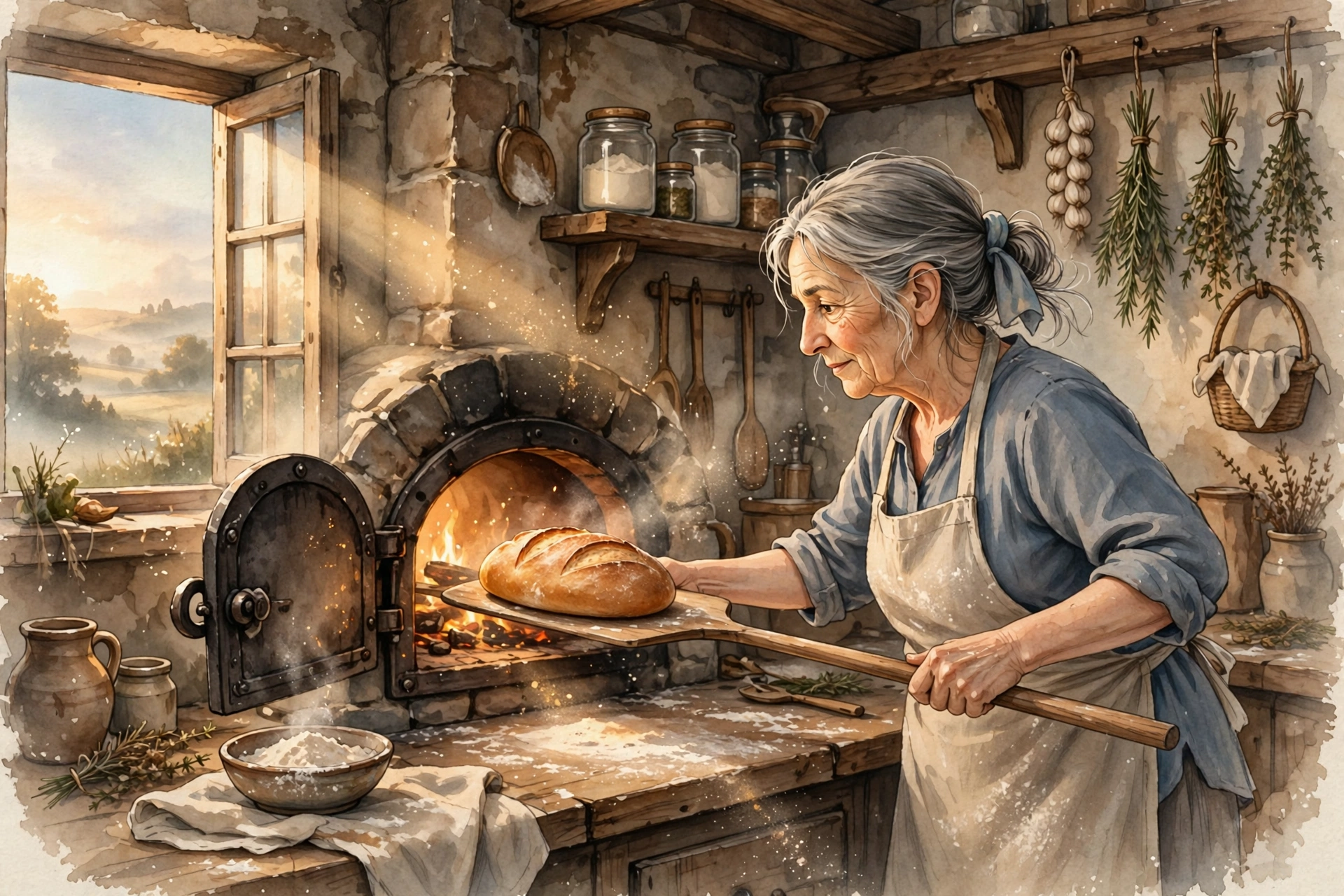
Some of the best inspirational stories for adults are not about dramatic comebacks or overnight success. They are about ordinary people who decide — quietly, on an ordinary Tuesday — that it is never too late to begin again. The Extra Loaf is one such story: the tale of Rosa, a 57-year-old retired accountant, and the bread that rebuilt her life.
The Extra Loaf
Rosa had been retired for eleven months when she realized she had forgotten how to be hungry for anything.
Not the stomach kind of hungry. The other kind — the kind that gets you out of bed before the alarm. For thirty-four years she had been an accountant at a shipping firm, and she had been good at it. Then the firm “restructured,” and the farewell cake in the break room had her name spelled wrong, and just like that, the calendar emptied.
Her husband, Daniel, had died three years earlier. Her daughter lived two time zones away and called on Sundays. The flat was clean. The bills were paid. Everything was fine, which was the worst part — everything was fine, and Rosa felt like a candle left burning in an empty room.
On a grey Saturday in October, she did something she had not done in years: she baked bread. Her mother’s recipe — flour, water, salt, yeast, and patience. The smell filled the flat like a memory walking in without knocking. When she pulled the golden loaf from the oven, her hands remembered what her mind had forgotten: this. She used to love this.
The next Saturday, she baked two loaves.
She wrapped the second one in a tea towel, wrote a note — “Thought you might like this. — R.” — and left it on the doorstep of Mr. Abernathy, the widower across the hall, who she had nodded at for six years without ever learning his first name.
On Sunday morning, there was a knock. Mr. Abernathy stood there holding the empty plate, and he was smiling — actually smiling.
“Forty years I’ve lived on this floor,” he said, “and this is the first time anyone’s knocked with food instead of a complaint.”
They talked for an hour. She learned his name was Walter. She learned his wife had made the same tea towel pattern. She learned he had not had a real conversation in months.
Rosa kept baking. Two loaves became four. A note on the lobby board — “Free bread, flat 3B, Saturdays” — and soon there was a small, quiet line at her door. A night-shift nurse who ate hers warm on the bus home. A single mother of three who cried the first time, then started leaving Rosa wildflowers in return. A teenage boy, all elbows and silence, who began showing up early to help her knead.
And here is the part Rosa did not expect: the street started baking back.
Walter began leaving jars of his late wife’s plum jam outside her door. The nurse brought soup. The single mother, who turned out to be a decent carpenter, fixed Rosa’s wobbling kitchen table without being asked. The teenage boy taught her how to video-call her daughter, and now they talked on Wednesdays too.
One Saturday, a full year after the first loaf, Rosa stood in her small kitchen dusted with flour, watching a line of neighbors chat in her hallway like old friends — because by then, they were. Walter raised his mug of tea and said, “To Rosa, who feeds the whole street.”
Rosa laughed, and her eyes were wet, and she said the truest thing she had ever said out loud:
“I thought my best years were behind me. Turns out I just hadn’t started baking them yet.”
She had set out to feed her neighbors. She never noticed the moment they started feeding her — small kindnesses passed hand to hand, until no one could remember who had started it, and no one wanted it to stop.
The Moral of the Story
Purpose is not something you find; it is something you bake, one small loaf at a time. You do not need a grand plan to change your life — you need one generous habit, repeated with love, until it quietly changes everyone around you too.
Think About It
- What is your “extra loaf” — a small skill or kindness you could share every week?
- Who in your life might be waiting behind a closed door for someone to knock with something warm?
- If you stopped waiting to feel ready and simply started, what would your first small step be?
Frequently Asked Questions
What is the moral of “The Extra Loaf”?
The moral is that it is never too late to begin again. One small, generous habit — repeated consistently — can rebuild not just your own sense of purpose, but a whole community around you.
Why do adults need inspirational stories?
Inspirational stories for adults speak to real grown-up struggles: burnout, grief, reinvention, and the quiet fear that our best years are behind us. A good story reminds us that new chapters can start at any age.
What makes an inspirational story relatable for adults?
Relatable inspirational stories feature ordinary people facing believable struggles — not heroes with superpowers. When readers see themselves in the character’s doubt, the character’s courage feels achievable too.